When the lights go out, or you’re venturing far from the nearest outlet, a generator isn't just a convenience—it's your lifeline. But stepping into the world of backup power can feel like navigating a maze. With so many options, from small, quiet units for camping to robust systems that power your entire home automatically, how do you even begin Understanding Generator Types: Portable, Inverter, Standby & More?
Don't sweat it. As your seasoned guide, I’m here to demystify the choices, cut through the jargon, and help you pick the perfect power partner. We’ll explore the main players, their strengths, weaknesses, and what makes each ideal for specific situations, ensuring you make an informed decision that truly meets your needs.
At a Glance: Your Generator Cheat Sheet
Before we dive deep, here’s a quick overview of the main generator types we’ll cover:
- Standby Generators: Your permanent, automatic home guardian.
- Portable Generators: Your versatile, on-demand power workhorse.
- Inverter Generators: Your quiet, clean-power companion for sensitive tech and recreation.
- PTO (Power Take-Off) Generators: Your tractor-powered solution for large rural needs.
- Industrial Generators: The titans built for critical infrastructure.
- Renewable Energy Generators: The eco-friendly, quiet alternatives.
Beyond the Basics: Understanding Power & Fuel
Before we dig into the specific types, let’s quickly cover some foundational aspects that impact any generator’s performance:
AC vs. DC: The Current Affair
Think of electricity like water flowing through pipes.
- AC (Alternating Current) Generators: These are the most common generators you'll encounter, producing power that constantly reverses direction. It's the standard for homes, businesses, and pretty much anything you plug into a wall outlet. AC is efficient for transmitting power over long distances and is what connects to the electrical grid.
- DC (Direct Current) Generators: Unlike AC, DC current flows in a single direction. You'll typically find DC power used for charging batteries, operating small motors, or specialized scientific equipment. While less common for general household use, they're essential in applications like electric vehicles or off-grid solar setups where battery storage is key. Most common generators produce AC, which is then converted as needed for DC applications.
Fueling Your Power: A Quick Look at Options
What you feed your generator directly impacts its efficiency, noise, cost, and convenience.
- Petrol (Gasoline): This is the most common fuel for portable and inverter generators due to its widespread availability. It’s easy to find, but it burns quickly, has a limited shelf life (it degrades over time), and its fumes can be potent.
- Diesel: Known for its longevity and fuel efficiency, diesel powers many larger portable and standby generators. It's often more expensive, but diesel generators are durable and the fuel stores better than gasoline, especially with stabilizers. Be prepared for them to be heavier and typically noisier.
- Natural Gas: The cleanest-burning fossil fuel for generators, natural gas offers a virtually unlimited fuel supply if you're connected to a municipal gas line. It’s highly reliable for standby units, but it's not portable and requires professional installation.
- Propane (LPG): This clean-burning fuel stores well in tanks and is more portable than natural gas. While it might deliver slightly less power than gasoline, propane doesn't degrade, making it an excellent choice for long-term storage or dual-fuel models. However, managing tanks requires safe handling and refilling.
The Main Players: Diving Deep into Generator Types
Now, let's get into the heart of the matter—the specific generator types you're likely considering.
1. Standby Generators: The Unsung Heroes of Uninterrupted Power
Imagine your power goes out. You don't lift a finger. Within seconds, lights, appliances, and HVAC kick back on as if nothing happened. That's the magic of a standby generator.
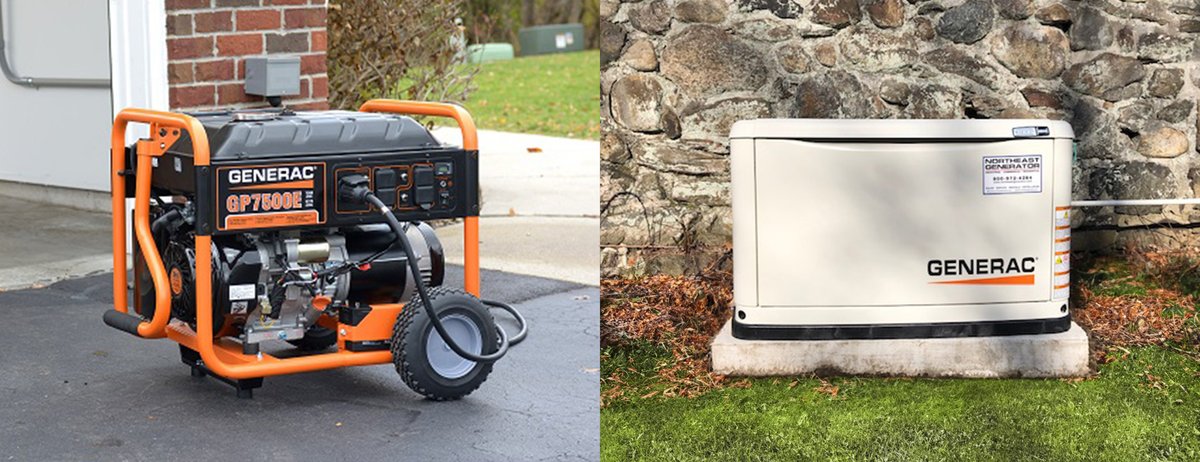
- What They Are: Standby generators are permanently installed outside your home or business, similar to an air conditioning unit. They’re hardwired into your electrical system and connected directly to a natural gas line or a large propane tank. Most importantly, they operate automatically.
- Why You Need One: Their primary use is providing whole-house or business backup power during outages. They're designed for extended, hands-free operation.
- Key Characteristics:
- Automatic Operation: A built-in automatic transfer switch (ATS) constantly monitors utility power. When it senses an outage, it seamlessly switches power to the generator, then switches back once grid power returns.
- Permanent Installation: They require professional installation on a concrete pad with electrical and fuel line connections. Permits and inspections are typically needed.
- High Power Output: Ranging from 7kW for essential circuits to 150kW+ for large homes or commercial properties, they can handle significant loads.
- Self-Testing: Many models conduct weekly or bi-weekly self-tests to ensure readiness.
- Weather-Protected: Built to withstand the elements, they keep running no matter the weather.
- The Upsides:
- Hands-Free: No scrambling in the dark to refuel or start a generator.
- Whole-House Power: Keep your entire home running—A/C, fridge, lights, water heater.
- Extended Run Times: With a natural gas line, they can run indefinitely.
- Quiet Operation: Generally much quieter than portable generators.
- Increased Home Value: A significant amenity for potential buyers.
- Enhanced Safety: No dangerous extension cords or carbon monoxide risks from indoor operation.
- The Downsides:
- Highest Upfront Cost: Expect to pay between $5,000 and $15,000 for the unit itself, plus another $2,000-$5,000 for professional installation.
- Permanent Fixture: Once installed, it's not moving.
- Maintenance: Requires regular professional servicing to ensure reliability.
- Top Brands: Generac, Kohler, Briggs & Stratton, Cummins, Honeywell.
- Is a Standby Generator Worth It for You?
- YES, if: You experience frequent or long outages (more than a few hours), rely on critical medical equipment, work from home, live in extreme climates, travel frequently, have a sump pump, or plan to stay in your home long-term.
- NO, if: Outages are rare and brief (less than 4 hours), you have minimal power needs, you're only planning a short-term residency, you have a limited budget, or you don't have access to natural gas.
2. Portable Generators: Your Flexible Power On-Demand
When you need power here, there, or anywhere, a portable generator is often the go-to solution. They’re designed for versatility and temporary needs.
- What They Are: These are mobile power sources, often equipped with wheels and handles for easy transport. They typically feature an open-frame design and multiple outlets to plug in various devices.
- Why You Need One: Perfect for temporary emergency power, job sites, camping, tailgating, or powering tools in remote areas.
- Key Characteristics:
- Mobility: Easy to move from one location to another.
- Manual Operation: You’ll need to manually start them (pull cord or electric start) and connect appliances via extension cords.
- Power Range: Available in a wide spectrum, from 1,500 watts for basic needs up to 17,500 watts for heavy-duty tasks.
- Runtime: Typically 8-12 hours at 50% load on a full tank of gasoline.
- The Upsides:
- Lower Cost: Significantly more affordable than standby units, ranging from $300 to $2,500.
- No Installation: Just unbox, fuel, and start.
- Versatile: Use it at home during an outage, at a construction site, or for recreational activities.
- DIY-Friendly: Easy to operate with a basic understanding of safety.
- Fuel Options: Primarily gasoline, but many dual-fuel (gas/propane) or even tri-fuel models are available for greater flexibility.
- The Downsides:
- Manual Operation & Refueling: Requires hands-on management, especially during an outage.
- Noise: They can be quite loud (70-80+ dB), which can be disruptive.
- Fuel Storage: Gasoline degrades, requiring stabilizers or regular rotation.
- Carbon Monoxide Risk: Absolutely must be operated outdoors, far from windows and doors.
- Less Stable Power: Output can have higher Total Harmonic Distortion (THD), making them less ideal for very sensitive electronics compared to inverter generators.
- Top Brands: Honda, Champion, Westinghouse, Generac, DeWalt, DuroMax.
3. Inverter Generators: The Quiet Revolution for Clean Power
If you love your gadgets, or simply crave peace and quiet, an inverter generator is likely your best friend. They’re a sophisticated evolution of the portable generator.
- What They Are: Inverter generators are advanced portable units that use a microchip-controlled inverter to produce "clean" or "pure sine wave" power. They convert raw AC power to DC, then back to AC, resulting in a very stable, consistent electrical current.
- Why You Need One: Ideal for recreational activities like camping or tailgating where noise is a concern, or for safely powering sensitive electronics such as laptops, smartphones, flat-screen TVs, and medical devices.
- Key Characteristics:
- Clean Power Output: Less than 3% Total Harmonic Distortion (THD), making them safe for all electronics.
- Variable Engine Speed: The engine adjusts its RPM based on the load, rather than running at a constant high speed. This drastically improves fuel efficiency and reduces noise.
- Quiet Operation: Typically run at 50-60 dB, which is comparable to a normal conversation.
- Compact & Lightweight: Often smaller and lighter than conventional portable generators.
- Parallel Capability: Many models allow you to link two inverter generators together to double the power output.
- The Upsides:
- Electronics-Friendly: Safe for all your sensitive devices without risk of damage.
- Significantly Quieter: Enjoy conversations or the sounds of nature without a roaring engine.
- Excellent Fuel Efficiency: Up to 40% more efficient than standard portables.
- Highly Portable: Easier to carry and transport.
- Lower Emissions: More environmentally friendly due to efficient operation.
- The Downsides:
- Higher Cost Per Watt: Generally more expensive than standard portable generators for the same power output.
- Limited Maximum Power: While they can be paralleled, individual units usually have lower peak wattage compared to large portable generators.
- Durability: Some models might not be as rugged as traditional open-frame portables in harsh conditions.
- Top Brands: Honda, Yamaha, Generac, Champion, Westinghouse, Briggs & Stratton.
4. PTO Generators: Harnessing Your Tractor’s Might
For those with a tractor, a PTO generator offers a unique, cost-effective way to generate substantial power.
- What They Are: Unlike other generators, PTO (Power Take-Off) generators don't have their own engine. Instead, they connect to the PTO shaft of a tractor or other vehicle, leveraging its engine to generate electricity.
- Why You Need One: Exclusively designed for farms, rural properties, or specialized agricultural applications where a tractor is readily available.
- Key Characteristics:
- Engine-Less: Relies entirely on the tractor's engine for power.
- PTO Connection: Requires a tractor with a compatible PTO port.
- High Power Output: Can produce 10kW to 100kW+ depending on the tractor's horsepower.
- Rugged Construction: Built to withstand demanding agricultural environments.
- The Upsides:
- Cost-Effective: If you already own a compatible tractor, the generator unit itself is much cheaper than buying a standalone engine-driven generator of comparable power.
- No Separate Engine Maintenance: One less engine to service.
- High Power Potential: Can deliver significant wattage.
- Uses Existing Fuel System: Relies on the tractor's fuel.
- The Downsides:
- Requires a Tractor: Useless without a compatible vehicle.
- Manual Setup: Connecting and operating requires hands-on effort.
- Ties Up Tractor: Your tractor is unavailable for other tasks while generating power.
- Noise: The tractor's engine can be quite loud.
- Not for Indoors: Like portables, they must be used outdoors due to exhaust.
- Top Brands: Winco, Generac, NorthStar, Voltmaster, Baumalight.
5. Industrial Generators: The Behemoths of Backup Power
When reliability and massive power are non-negotiable, you enter the realm of industrial generators.
- What They Are: These are enormous, high-capacity systems designed for continuous, heavy-duty operation in critical environments.
- Why You Need One: Hospitals, data centers, factories, mining operations, and large commercial buildings depend on industrial generators to prevent catastrophic downtime. They’re built for non-stop, massive loads and serious reliability, often in a complex, integrated power management system.
- Key Considerations: Their installation is highly complex, requiring specialized engineering for fuel storage, exhaust, ventilation, and extensive maintenance protocols. These aren't just for backup; they're often primary power in off-grid industrial settings.
Beyond Fossil Fuels: Exploring Renewable Energy Generator Options
For those looking to reduce their carbon footprint or operate in very quiet environments, renewable energy solutions are gaining traction.
- Solar Generators: These aren't generators in the traditional sense, as they don't generate power through combustion. Instead, they are portable power stations with large batteries charged by solar panels. They store energy from the sun during the day and release it as electricity when needed.
- Wind Generators: These systems use wind turbines to generate electricity, either to charge batteries or feed directly into a local grid.
- The Benefits: Both solar and wind generators offer zero fumes, silent operation, and clean, renewable energy. They’re excellent for off-grid living, remote cabins, or as supplements to traditional systems.
- Hybrid Systems: Many homeowners combine solar or wind power with a traditional generator. This hybrid approach uses renewables as the primary power source and kicks on a traditional generator for backup when solar/wind output is insufficient, significantly reducing emissions and fuel costs.
Critical Power Safety: A Non-Negotiable Guide
No matter which generator you choose, safety is paramount. Ignoring these rules can lead to serious injury or death.
- Outdoor Operation ONLY: This cannot be stressed enough. Never operate a portable or inverter generator indoors, in a garage, shed, or any enclosed or partially enclosed space. The invisible, odorless carbon monoxide (CO) gas produced can be deadly.
- Maintain Distance: Keep portable and inverter generators at least 20 feet (6 meters) from your home, away from doors, windows, and vents to prevent exhaust fumes from entering living spaces.
- Carbon Monoxide Detectors: Install and maintain working CO detectors on every level of your home, especially near sleeping areas. They are your first line of defense against this silent killer.
- Professional Standby Installation: Standby generators must be installed by a licensed electrician and gas plumber. This ensures proper wiring, fuel connection, and compliance with all local codes.
- NEVER Backfeed: Connecting a portable generator directly to your home's electrical panel (known as backfeeding) can send power back into the utility lines, endangering linemen and potentially damaging your appliances. Always use a professionally installed transfer switch or simply plug appliances directly into the generator using heavy-duty outdoor-rated extension cords.
- Proper Grounding: Follow manufacturer instructions for grounding your portable generator to prevent electric shock.
- Weather Protection: If you need to operate a portable generator in rain or snow, use a specially designed generator tent or cover that allows for proper ventilation. Never cover a running generator with tarps or boxes.
- Fuel Storage: Store fuel in approved, clearly labeled containers, away from living spaces, heat sources, and direct sunlight. Only refuel a cold generator; never refuel while it's running or hot.
Making Your Final Decision: What's the Right Generator for You?
Choosing the right generator boils down to a few key questions about your needs, budget, and lifestyle. Before you finalize anything, you'll need to accurately determine your power requirements. For a detailed breakdown on how to calculate what you need, check out our guide on Choosing the right generator size.
Here’s a practical roadmap to help you decide:
- For Whole-House, Hands-Free Backup: If frequent or extended outages are a concern, and you need seamless power for your entire home (including A/C, well pump, etc.) without any manual intervention, a Standby Generator is your premier choice, provided your budget and property allow for it.
- For Occasional Emergency Power & Versatility: If your outages are rare, or you need power for camping, tailgating, or a job site, a Portable Generator offers excellent value and flexibility. Be prepared for manual operation and higher noise levels.
- For Sensitive Electronics & Quiet Operation: If powering laptops, medical devices, or simply enjoying peace and quiet is a priority, an Inverter Generator is unmatched. They're also great for fuel efficiency and portability.
- For Farms & Rural Properties with a Tractor: If you already own a tractor and need substantial backup power for agricultural needs, a PTO Generator provides a powerful and cost-effective solution.
- For Maximizing Flexibility: Consider a layered approach. A smaller Standby Generator could handle essential circuits automatically, while a portable Inverter Generator provides clean, quiet power for sensitive electronics or recreational use elsewhere.
- For an Eco-Conscious Approach: Explore Solar or Wind Generators for silent, fume-free power, especially for off-grid scenarios or as a primary power source backed by a traditional generator.
Ultimately, your perfect generator balances power requirements, budget, usage scenarios, and noise tolerance. Whatever your choice, remember that proper installation, regular maintenance, and strict adherence to safety protocols are not just recommendations—they are critical for the reliability and safe operation of your power solution. Power outages may be inevitable, but feeling powerless doesn't have to be.